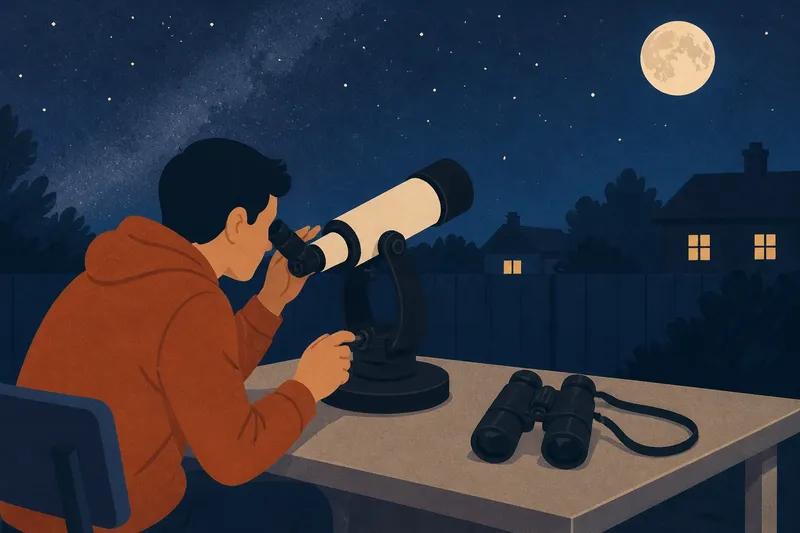
A Shared Skywatching Evening for a Cloudy Season
Plan a cloudy-season skywatching evening with a clear go-or-stay decision, a shared constellation activity, and ways for everyone to take part.
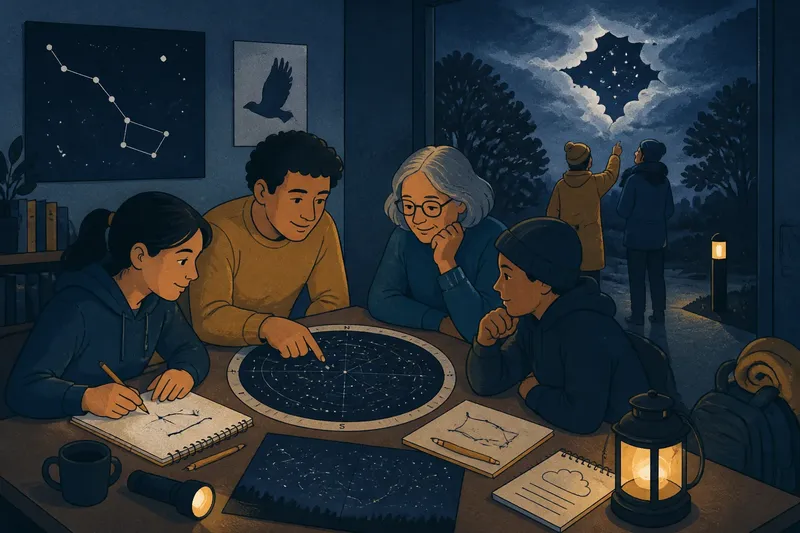
The most common mistake in cloudy-season skywatching is calling off a gathering as soon as clouds appear. That can cost the group an evening of shared discovery, even when a brief break in the clouds—or an indoor activity—would make the trip worthwhile. A little planning gives everyone a clear choice without turning the night into a forecast vigil.
Promise a shared evening, not a clear sky
Describe the plan as an indoor gathering with an optional outdoor look if conditions allow. That sets an honest expectation and lets newcomers know they do not need equipment or astronomy knowledge to join. Choose a comfortable room near a suitable outdoor spot, such as a library meeting room beside an accessible courtyard.
Invite guests to bring a question about the night sky or a pattern they remember seeing. A pencil and warm layer may be useful, but keep the invitation simple. The point is to make participation easy, not to build a packing list.
Use a short, local sky check to decide
A forecast describes broad conditions, not the view from your gathering spot. Shortly before the event, step outside and look for a visible horizon, broken clouds, or a patch of open sky. Agree in advance: if a recognizable area is visible and the route is suitable, the group can go out briefly; if not, stay indoors and continue with the map activity.
Say you are hosting beside a neighborhood park. The sky is mostly overcast, but a gap opens above the trees. You invite the group outside to compare the opening with the map, then return indoors when clouds close it. The result is a short shared observation, not an expectation of a full clear-sky session.
Repeatedly refreshing weather apps is not worth the effort. One local look and a simple decision are usually more useful than trying to predict every change.
Build the indoor activity around one constellation
Choose a constellation that a local sky chart identifies as visible during the season, or use one familiar to the group. Start with the star pattern and show how a chart connects the stars with lines. Explain that those lines are reading aids, not marks in the sky.
Stories attached to constellations differ among cultures. Name the tradition when you share a story, and leave room for other accounts or interpretations. Ask participants what shape they see before introducing the familiar outline. A bird, a tool, or an unnamed pattern can all be thoughtful observations.
If clouds prevent an outdoor view, ask everyone to sketch the pattern they see on the map before sharing its name or story. Compare the sketches afterward. The exercise encourages close looking without making the chart feel like a puzzle with only one acceptable answer.
Give the group a map task with a clear purpose
Use a printed planisphere, a local astronomy club’s chart, or a sky map app. A shared paper chart makes it easy to point together; an app can show the sky for a chosen time and direction. Offer a paper option for anyone who would rather not use a phone, and dim screens outside when practical.
Give the group one task: find a recognizable pattern on the chart, then trace a route from it to a second reference point. If the group steps outside, look for the pattern in the corresponding patch of sky. If clouds block the view, trace the route on paper and note what would make the pattern easier to find later.
- Check whether the chart matches the gathering location and intended observing time; if it does, use it, and if it does not, select a location- and time-appropriate chart.
- Check which side of the venue has the clearest view; if one direction is open, mark it on the chart, and if none is open, plan to work indoors.
- Check whether the group can identify a reference pattern on the chart; if it can, use it to trace a route, and if it cannot, choose a simpler, more familiar pattern.
- Check whether everyone can see and reach the shared chart; if they can, point and discuss together, and if they cannot, provide individual paper copies or describe the chart aloud.
- Check whether phone screens are comfortable for the group outdoors; if they are, use the app briefly, and if they are too bright or unwelcome, switch to a printed chart.
- Check whether clouds leave a visible patch above the chosen landmark; if they do, take a brief look outside, and if they do not, continue the map activity indoors.
Mark the location, approximate observing time, and one pattern the group hopes to find. Treat those notes as a record of the plan, not proof that the object was visible. Trees, buildings, lights, and cloud gaps all shape what can be seen from a particular spot.
Compare observations without turning them into a quiz
Invite each person to describe one thing they noticed. It might be a pattern, a cloud opening, a confusing chart symbol, or a difference between the map and the view. Descriptions such as “three points in a bent line” are useful even when nobody knows the name.
Keep a shared page for notes and sketches. In a mixed-age group, children might draw while adults add directions or nearby landmarks. Ask, “What would help us find that patch again?” rather than demanding a correct answer. That keeps the conversation practical and makes room for beginners.
Make outdoor participation comfortable and flexible
Choose a spot with firm footing and enough room for people to sit or stand without blocking one another. Tell guests where the restroom is and whether the route is lit. Use lighting that supports safe movement; a dim or red light may help preserve night vision, but a brighter light may be the sensible choice on an uneven path.
Offer an indoor role for anyone who prefers not to go outside. They can follow the chart, record cloud openings, or collect sketches. Make those roles part of the event rather than presenting them as a consolation prize. Check venue rules and accessibility arrangements where they apply, and avoid requiring unfamiliar equipment.
What should a cloudy-season skywatching evening include?
Can a skywatching gathering work if clouds cover everything?
Yes. A constellation story, chart activity, and group sketches give everyone something to observe indoors. If the clouds later break, the group can choose whether a brief outdoor look is suitable.
How should a host decide whether to go outside?
Make one local check for a visible patch of sky and a suitable route. If both are available, step out briefly; otherwise, stay with the indoor plan instead of repeatedly checking the forecast.
What should beginners bring to a group skywatch?
Comfortable clothing for the conditions is helpful, while a pencil and a printed chart can support the shared activity. Keep specialized gear optional so that lack of equipment does not prevent anyone from joining.
How can a host include people who cannot go outside?
Offer a chart, drawing, or note-taking role indoors and share observations when the outdoor group returns. Let participants choose the role that suits them rather than treating indoor participation as secondary.
Carry one question into the next gathering
Before people leave, ask what they would like to look for next time: a particular constellation, a direction they have not explored, or a question about reading the chart. Write the suggestions on the shared page so the group has a concrete place to begin when it meets again.
Cloudy-season skywatching works best when the plan gives people more than one way to take part. A marked chart, a sketch, or a new question can make the next clear patch easier to use—and gives the group something useful to bring back indoors if the clouds return.